Secret Service on Trial
Steve Jackson Games Trial: Day-by-Day
by Paco Xander Nathan
Day One
DATELINE: January 26, 1993 - the beginning of three strange days of Federal District Court in Austin, Texas. A rare frost lays on the ground and chill air descends on the "birthplace of cyberpunk" as I ride down to Judge Sam Sparks' courtroom. I have to check my stun at the X-ray desk - politely. Even then some big Federal Marshal goon pulls me out of a pretrial crowd to demand ID and lecture about "weapons in a courtroom." 'Tis a task performed with apprehension because today of all days, the Feds must take the stand - poised for a fall, as improbable as it may seem, at the hand of a mob of Freaks. "Computer Freaks." You can see it written in the eyes of each SS agent surrounding the court room. Today the Feds themselves are on trial; today They can no longer run and hide.
First we must wait for Judge Sparks to clear the docket. A jury deliberates its eventual "guilty" verdict on a guy who'd sent an 11-year-old in to conduct a bank heist, and Sparks prepares to send that guy on his third trip to camp. Outside the parties in our case pace fervently... Ed Cavazos, vice-president of EFF-Austin, recent UT/Austin Law School grad and a good friend, bounces off the walls in anticipation. This is Ed's first full case: he's been a sysop for years, runs a popular BBS in Austin called Bamboo Gardens, and grabbed a lucky break by educating the local newspaper's high-tech law firm - George, Donaldson, & Ford, LLP - about the arcane ways of computing and BBSes. Shari Steele of the Electronic Frontier Foundation - major underwriter for the plaintiff's legal fees - works the field for her home office. Joe Abernathy of the Houston Chronicle and The Village Voice - probably the first major newspaper columnist to cover computer underground issues on a regular basis - presses flesh in an attempt to uncover dirt. Steve Jackson stands nervously, chatting, trying to maintain a good humor among plaintiff groupies which even includes his mom. A vague array of Fed spooks and lawyers one the courthouse shadows, avoiding all contact. Lawyers from both sides huddle and haggle in a last minute settlement procedure which dies when the SS claims they "lack enough budget" to cover Steve Jackson Games' legal fees. Well, we'll see, eh?
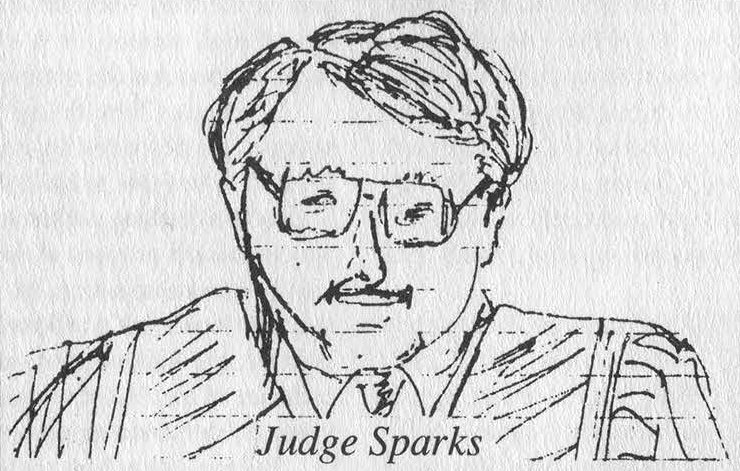
Sparks delays the trial until after lunch. I overhear SS agents' talk about restaurants, so I tail them and sit down at the next table after they order. They get up in disgust and move to the back of the restaurant.
"The Court calls the case of SJG et.al. versus SS et.al. to order..." Plaintiff, with lawyer Pete Kennedy at the helm, introduces witnesses: Steffan O'Sullivan, Elizabeth McCoy, and Walter Milliken - SJG writers and users of the seized Illuminati BBS who'd joined in the lawsuit as plaintiffs - along with Wayne Bell, developer of WWIV bulletin board software. Government defense introduces Larry Coutorie - famed UT Austin "computer cop" - and SS agents Tim Foley and Barbara Golden.
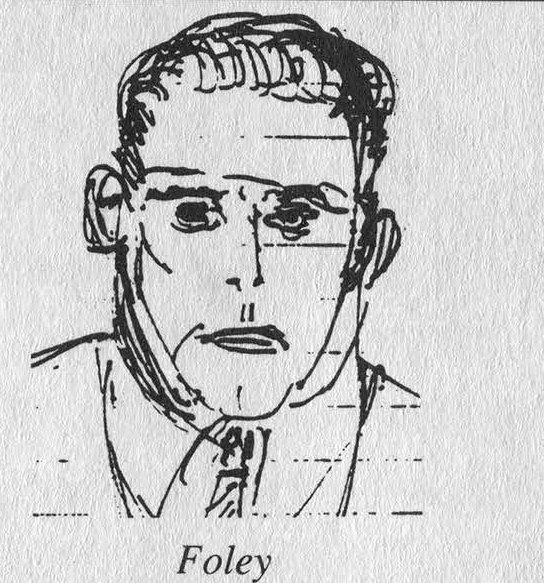
Timothy Michael Foley takes the stand under cross-examination. Loyola University '84 Law School grad, trial layer for 2+ years, lately of the U.S. Secret Service - a good 'ole boy in any other life. Foley was the SS agent assigned to the "E911 Document" investigation and his sworn affidavit to Fed Magistrate Stephen H. Capelle early in 1990 lead to a search warrant for the SS raid on SJG. Foley rambles defensively about his computer expertise, brags of being top dog at SS Computer Fraud School, tells how he learned about "Social Engineering" there in mid-1989, only months prior to the decision to raid SJG. Foley talks boldly of Phrack, Issue #24 and the Craig Neidorf case, sloppily explains BITNET to the judge, then mentions the Phoenix Project - a "suspected hacker BBS" operated in Austin by "The Mentor" (a.k.a. Loyd Blankenship) and "Eric Bloodaxe" (a.k.a. Chris Goggans), and thought by the SS in 1990 to contain secret areas for instruction on "computer crime." One of the sysops worked for SJG and therein lies the only grounds for the raid.
However, under oath Foley admits that at the time of his affidavit to Capelle, he didn't have any info showing the E911 document ever even reached the Illuminati BBS and SJG. Moreover, Foley confesses he knew that "telecom expert Hank Kluepfel [who enters this grim picture later] had never logged into Illuminati." When asked about the allegedly threatening SJG project called GURPS Cyberpunk, Foley states: "I did not read through the game."
Not terribly incriminating so far, but enough to show that the SS had not made a full disclosure to Magistrate Capelle before obtaining a search warrant. Even so, never assume the Government is sleeping.
Up walks Mark Batten, a tall, slim, boyish-skinned assistant U.S. Attorney. Batten knows computing, in fact he spends most of his off-hours porting DOS games to the Macintosh ("I got a Mac in college and I've been doing that ever since" he tells me during break). Batten takes Foley off the hook by having him testify that the SS didn't teach about Federal statutes which limit seizure of equipment from publishers.
Next we get Officer Larry Coutorie on the stand. Coutorie has been with the UT Austin police for years, but lately seems to be working the computer crime beat. The SS search warrant against SJG claimed that Officer Coutorie had provided "UT locator information" about Loyd Blankenship and cited one of Coutorie's documents. Under oath, Coutorie denies the alleged snooping, since Blankenship was never affiliated with UT Austin nor in the school databases. Coutorie claims the document was printed after the SJG raid. Note that Officer Coutorie is technically "on the other side" from SJG, but in depositions he distanced himself from the Feds. Rumor has it that the Coutorie's lawyer's car sports a nifty EFF bumper sticker. Ladies and gentlemen, this marks a blow for the Feds.
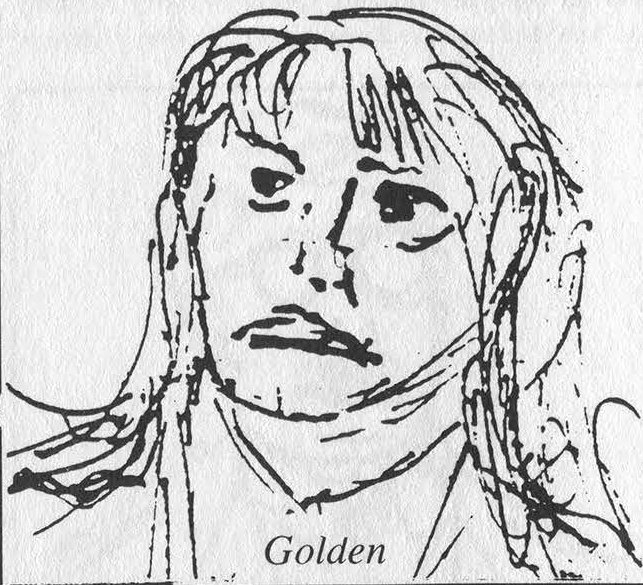
But wait, another SS agent - Barbara Golden from the Chicago area - takes the stand. Golden looks timid, indignant, fearful, like a third grade teacher surprised in a fire drill. She answers in fitful, nervous clips of "Yes" and "No." Golden - who conducted the SJG raid and computer equipment seizure - admits under oath that she "didn't know much about computers," claimed she "didn't know about search rules for publishers" but counters that Steve Jackson Games, Inc. - the renowned publisher of role-playing game books - wasn't a publisher.
Plaintiff calls for a videotape of the raid - recorded by the SS - to be entered as evidence. After several abortive attempts (Sparks jokes: "Let the record show that no one could successfully operate the VCR although there were several attempts by various lawyers") the video finally spins its eerie record of the early morning bust on March 1, 1990. Office walls show notes about printing schedules and halfway through somebody from SJG walks in aghast, shouting "We are a publisher!" Ignorance doesn't get much more blatant than this, and rumor has it that cyberpunk author/journalist Bruce Sterling will show a copy of the tape as a backdrop during his next lecture tour.
Steven Gary Jackson jumps into the hot seat next. Steve, who attended law school before becoming a gaming industry entrepreneur in 1980, understands the essence of this game and it shows. Over the course of the afternoon and the next morning, Steve's lawyers guide him through an extended testimony: the nature of Role-Playing Games (RPG)... creation of his GURPS system for role-playing... origins of "cyberpunk" as a literary genre in novels such as 1984 and Neuromancer... intentions for the seized GURPS Cyberpunk to have been a literary survey. "That book was key to our company's financial well-being - distributors judge you on the basis of new product each month." Jackson goes on to describe the Illuminati BBS, and how he didn't even know why it was seized by the Feds and therefore feared replacing it. "We tried hard to find out [why the BBS was seized]..." At one point near tears, Jackson explains what appears to be his main contention against the government: "After the raid, I saw my employees being upset... We couldn't see any way to stay in business without drastic cuts, so we laid off eight people out of 18... If the Secret Service had just come with a subpoena we could have showed or copied every file in the building for them."
Steve closes the first day's testimony with an appalling account of trying to obtain copies of his seized disks - vital business records and publication drafts which were held for months with no explanation - from Agent Foley:
Tim Foley (referring to GURPS Cyberpunk): "Do you realize you're publishing information on how to commit computer crime?"
Steve Jackson: "This is a game."
Tim Foley: "No, this is real."
Day Two
Defense counsel Mark Batten cross-examines Jackson in a cowardly attempt to imply that SJG was in financial trouble before the raid but recovered to profitability afterward. Judge Sparks interrupts: "Because it was raided by the Secret Service? Is the Government claiming they helped his business by seizing equipment?"
Batten counters with a conceptual right hook: "No, your Honor..." - then launches into a sordid tale about how the SJG game Hacker resulted from the raid, and how SJG capitalized on publicity surrounding the SS action. Defense tries to pin the issue on Steve:
Batten: "Why did you design Hacker?"
Jackson: "I was angry... I am a writer, this is the way I tell a story."
Elizabeth McCoy takes the stand next. As an interactive fiction writer for SJG, she'd been a board moderator on part of the seized Illuminati BBS. Elizabeth testifies that her project "was seriously damaged by the raid" and goes on to read a private email message that was on the seized BBS and ostensibly "investigated" by the SS. The message contains a beautifully mushy personal letter from SJG writer Steffan O'Sullivan about another writer at SJG - Walter Milliken - whom she since has married. Milliken takes the stand and also describes the use of email on Illuminati BBS for SJG work. Walter understands email quite well; he's a computer scientist for BBN, the firm which created Internet.
Government loses a few cool points here, but Batten tries to recover by reading a sworn deposition from SS computer security specialist Larry Boothby who analyzed the seized equipment. Boothby claims to have used Norton Utilities to conduct word searches, which Batten explains to Judge Sparks: "He'd type in the word 'hack' and it would show on the screen with surrounding text." Note that Boothby wasn't available since he had resigned from the SS just as the case was scheduled to go to court "and could not be reached." Some think Boothby may have taken a fall for the organization... As a tipoff, his deposition did include unfavorable remarks about Agent Foley's alleged computer expertise: "They might as well have had Mickey Mouse in there."
Next on the dance card, Wayne Bell steps up as an expert witness for SJG. As author of the WWIV software for BBS - which Illuminati BBS uses - Wayne's wares run on over 2000 systems, for an audience of 3 million. Wayne had been called in to review the Illuminati BBS as soon as the SS had returned it. "It appeared that all the mail had been deleted by March 20, 1990." Wayne testifies that he checked the PC's system clock and verified file time-stamps with phone records which users had provided. "Off by about 6 minutes at most."
Judge Sparks asks to have the term "sysop" defined at several points - burn that into your memory. He claims utter ignorance of computing technology, which plays well into plaintiff's hand. SJG is trying to sue the U.S. Government for damages based on Federal statutes and constitutional law, but the Government is pulling a classical defense tactic by snowing the judge with technical terms. So SJG needs to make this as simple and clear-cut as possible.

Next up to the stand comes Henry Michael Kluepfel, alleged computer crime expert and anti-hacker from Bellcore, looking surprisingly like a cross between Woody Allen and Adolf Hitler - whiny, wimpy, and vile. "I provide information related to threats" is the introduction Kluepfel uses to justify his place in life. He goes on to describe how in 1989-90, he'd been investigating the E911 document's spread by logging into suspected BBS under the handle "ROTDOC" and looking for files about computer intrusion. He whines at length about Phrack, Jolnet, E911, etc., but admits that:
- The Phrack issue in question with the E911 document didn't provide any steps for how to break into computers.
- The information is available to the public anyway - "But not quite what was in the BellSouth document."
Judge Sparks becomes visibly lost in Kluepfel's sea of technical terms, and misses the point that Kluepfel just slit his own throat. So Kluepfel continues... He talks about exploring Phoenix Project, about finding a file related to E911, downloading it, providing an affidavit to BellSouth, then forwarding the file to the U.S. Attorney in Chicago - William J. Cook.
Early in 1990, the Phoenix Project BBS shut down. Kluepfel explains that "Newlin was wondering where Phoenix Project BBS might reside since it wouldn't answer. Could Steve Jackson Games' Illuminati BBSbe the new Phoenix Project?" Kluepfel goes on to admit the fatal flaw: "I did not tell Newlin that there was anything connecting Steve Jackson Games other than that Mentor was co-sysop of both BBSes and that both BBSes ran WWIV software."
Again, the judge is snowed in technobabble, and at this point the defense takes up questioning and prompts Kluepfel - the U.S. Government's computer expert - to help educate the judge. Kluepfel testifies about having found evidence on the Phoenix Project BBS, including: "Kermit and XMODEM, which can be used as tools for computer crime." Sparks then speculates about the need for a raid, whether other alternatives were open: "Would it have been possible for the Government to take this issue to another Reebok [sic, should be RBOC] for information?" Kluepfel counters with his own reputation: "I was asked as an expert with 25 years in computer security, network security" - so ostensibly his word was good enough for the Government to act. So they did.
Hey, this guy is pure wretchedness distilled into a puny frame. During court recess I go outside to track him down, shaking his hand just to experience a pure, raw state of Disgust. We chat a bit, talk of our respective tenures at Bell Labs, how he works in a town where I used to live - Red Bank, New Jersey. Not a bad guy really, a bit nervous and defensive, probably a reasonable response for a person who has just lied under oath to a Federal judge and seems at least intelligent enough to know it.
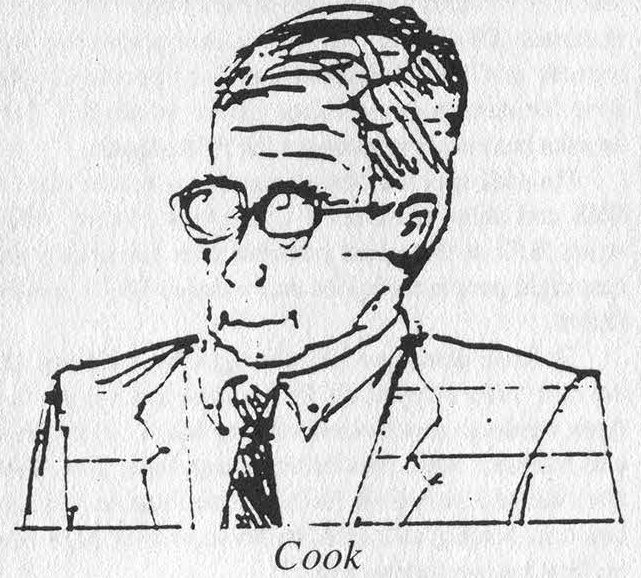
Now the fireworks begin. Former U.S. Attorney William J. Cook - who quit rather suddenly after the SJG case reached national press - climbs into the pilot seat. Finally those of us in the SJG peanut gallery recognize who this asshole is, since he'd asked us to shut up during court recess "so as not to pollute my testimony." As if it were possible, Bill... Cook struts up to the stand like a cross between Walter Mathau and Dana Carvey's rendition of George Bush, indignant and condescending to everyone in the courtroom except for the judge. Cook even interrupts court proceedings to correct plaintiff counsel on proper procedure. This guy got burned by the SS raid and now has a score to settle. Cook responds to cross-examination about his $79,000 figure for the worth of the "stolen" E911 document. Under oath he specifies that $22,000 was for the purchase of an Interleaf word processing software package, several more thousand was for computer hardware used to type the document, along with salaries for people doing the typing... When pressed by plaintiff counsel, Cook admits these pork barrel systems were not used up in the process of typing a few pages.
More to the point, Cook admits:
- That he knew about the Privacy Protection Act (PPA - which limits government seizure of equipment from publishers) but didn't advise the SS about its implications prior to the SJG raid.
- That he understood the relevant wiretap law in the Electronic Communications Privacy Act (ECPA - which MAY limit interception of email) but didn't advise the SS against seizing a BBS that contained unread email.
Cook then ties in DOD's Computer Emergency Response Team (CERT) which "visited" Craig Neidorf about Phrack and E911: "As a result, agents sought and received a search warrant" against SJG. Cook explains that after the seizure, two files were identified and deleted - an alleged password cracker called "DE-ZIP" and some unspecified software believed to have been illegally copied - however he fails to specify which computer held the deleted wares. Keep that in mind too...
Judge Sparks kicks in to question William J. Cook for a bit, uncovering two startling items:
- Cook's admission that the U.S. Attorney's office made no attempt to determine the nature of SJG's business prior to the raid.
- Cook's claim that he is "aware of an ongoing investigation about criminal charges against Blankenship and/or Goggans."
Next in line, SJG's accountant steps up to provide expert testimony about the damages incurred by the raid and confiscation of equipment, records, drafts, etc. The accountant cites several key losses: gaming books not being released, delayed shipments, loss of the BBS as a communications interface for the firm, layoffs of good talent, impact on Steve Jackson's own time for creative writing, and expenses for litigation. She provides balance sheets, cost estimates, revenue projections, etc., but the Judge seems annoyed. Even using a seven percent interest rate for present discount values (a financial giveaway to the Government), the accountant arrives at a $2.1 million total for damages. Sparks doesn't seem happy and calls it a day...
Day Three
After a delay caused by unrelated legal proceedings, Government defense steps up and attempts to have the case thrown out of court, urging Judge Sparks not to risk extending the ECPA statute. In response, Sparks grows annoyed: "It appears to me that I'd have to rewrite that statute to agree with the Government's case... It appears that Loyd Blankenship could have prepared to engage in some heavy criminal activity. You saw a BBS with a notice about conspiracy... but it would have taken an hour or less to do [the investigation] as it should have been done. Don't you think Congress should decide how far the ECPA should extend? I don't think ECPA applies in any way to this case - so what? Did Blankenship have possession at the time the search warrant was executed by his ability [as sysop] to delete files? I want that answered."
EFF-Austin members drop by to watch the last part of the trial - several students even manage to get out of high school for it - but a Fed Marshal boots them out because the males aren't wearing suit jackets.
SS Agent Tim Foley hops back up as defense witness. He describes his impression of the confiscated GURPS Cyberpunk to build the Government's case about a "potential hacking conspiracy." "It appeared to me to be a fictionalized account of what LOD was doing." Back under cross-examination, he admits there was nothing in the search warrant's affidavit about a threat to national security, the disappearance of the Phoenix Project BBS, evidence of the Phoenix Project BBS appearing at SJG, or evidence incriminating any other BBS at SJG.
Foley launches into an account of how Blankenship's former place of work - Nth Graphics in Austin, Texas - had also been "visited" at the time of the SJG raid. "We had a record that the E911 document had gone to Nth Graphics. We went there and asked to see the machine but it crashed so we didn't pursue any further." Foley verifies a plaintiff's exhibit - a handwritten document by SS agent John Lorenzi which explains that a purported NSA document found at Goggans' home actually had a SJG logo, trademark, and copyright on the bottom, i.e. it was just a part of a game.
At this point plaintiff counsel Pete Kennedy and Judge Sparks both question Foley, in a legal equivalent of an online chat, making defense counsel turn pale...
Foley: "It took one week on the machine to analyze the files.
Kennedy: "But the equipment wasn't returned for three months?"
Foley: "Yessir."
Sparks: "Why?"
Foley: "We had to make reports."
Sparks: "But clearly after one week, the United States of America could have finished analyzing the disks and have returned the equipment to Steve Jackson Games?"
Foley: "Yessir."
Foley goes on to say there was never any evidence to incriminate SJG before or after the seizure. Sparks presses again, emphatically: "Why couldn't copies of everything be made within seven days and returned to Steve Jackson Games as requested by his lawyer?" So Foley admits there was no reason not to return equipment after March 28, 1990 at the latest. The tragedy is that Foley had been insistent on the raid, and yet he'd only become aware of SJG on February 22, 1990 - just one week prior.
In closing remarks, Judge Sparks reveals a dangerous misconception: "How do I know that illegal material was not in the GURPS Psychopunk [sic] drafts? We know that the computers contained sensitive materials (E911 document) and even illegal materials (DE-ZIP)... But let's assume a violation with regards to GURPS Psychopunk [sic] occurred, what were the damages established by the evidence?" Then he asks both sides to interpret the PPA statute.
Plaintiff specifies the damages to include: loss of BBS and delay of GURPS Cyberpunk release, which struck SJG at the worst possible time financially and cost eight people their jobs and reduced SJG's creative talent.
Defense dismisses the damages by claiming that the raid "only delayed GURPS Cyberpunk by less than three weeks (a down-sized version based on old drafts was released, late), plus better management procedures after the seizure which forced Steve Jackson to spend less time writing and more on business may have been his best business move ever."
Sparks counters this tripe: "So the Secret Service is now helping businesses by search and seizure? The officers charged with this 'evil conspiracy' obviously jumped to a conclusion... Admittedly without evidence they took three computers and 300 disks and ignored Steve Jackson's lawyer's attempts to get back the equipment. It just doesn't pass the smell test for the Government to come in without any evidence against the company and take things that anybody could tell would harm the company. The reason this wasn't done in good faith was lack of investigation by the Secret Service. Evidence shows that by March 2, 1990, somebody in the Government knew a book was involved [in the seizure]. There is no question in my mind that Steve Jackson Games, Inc. sustained damages and expenses as a result of misconduct by the U.S. Secret Service..."
Epilogue
Immediately after the trial, Steve Jackson seemed pretty discouraged. He and Pete Kennedy walked across the room to talk with Mark Batten and company, offering "We've been talking as people to each other for quite some time" - to which one of the Government lawyers returned "Now you know that we're not multi-headed Gorgons; we've all been in the same trench." Maybe not.
Later that night, a number of us met to decompress. We play-tested a new game (about post-apocalyptic mutated rabbits) that somebody had submitted to SJG. Steve wanted to play, wanted to do anything but hear the words "lawyer" and "Secret Service" again for a long time. I brought over a collection of Smurfs in Hell game wares for him to check out. When I left just past midnight, Steve was killing everybody else's bunnies, nuking Mormonoids, and studying notes for another game all at the same time. This, after standing up in the face of the United States Government, after fighting the good fight for three years without a payback - other than integrity. With all the courage and the humor and the genius shown through, you have to admire a guy like that.
Outside the WWII newsreels you don't find many heroes, but here is one indeed.
All courtroom sketches drawn by the author.
As this issue went to press, the verdict in the Steve Jackson case had not yet been reached. It's quite likely that there has been a decision by the time you are reading this. We will leave a recording on our main office line (516-751-2600) as soon as a verdict is announced. Details will appear in the Summer 1993 issue.