/2 minus 2-15% depending on specific antenna characteristics.
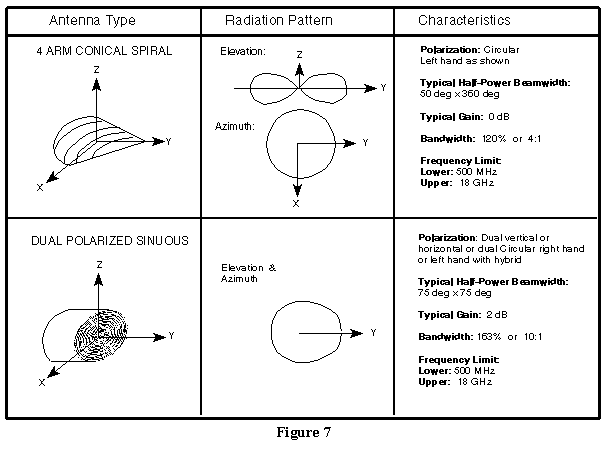
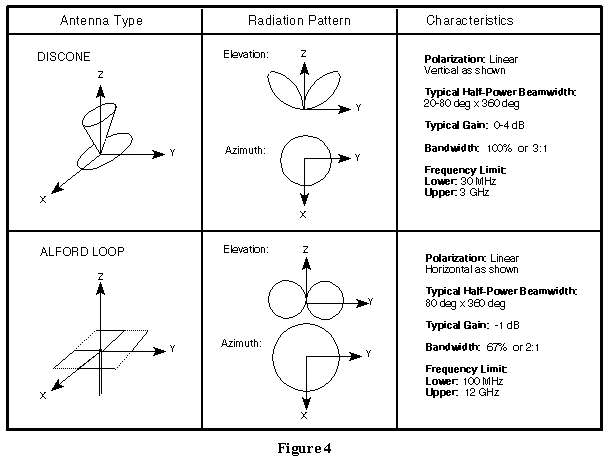
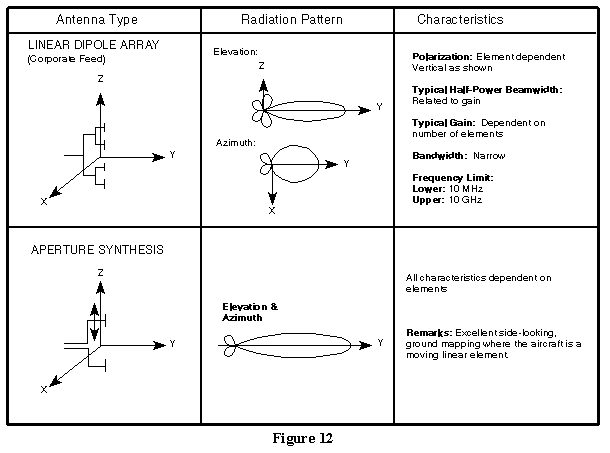
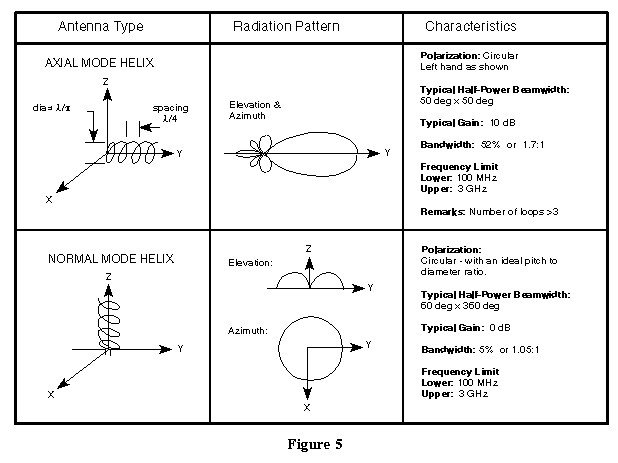
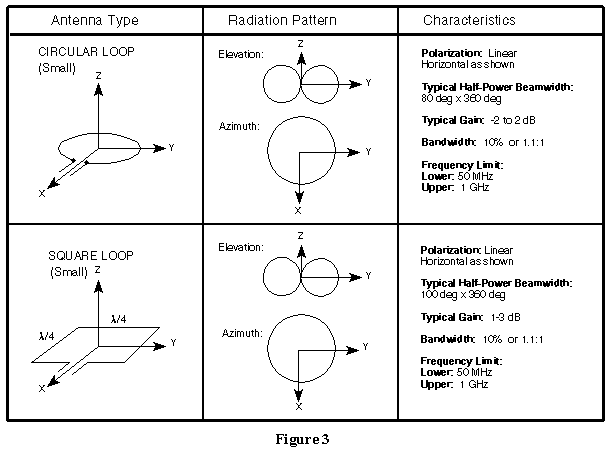
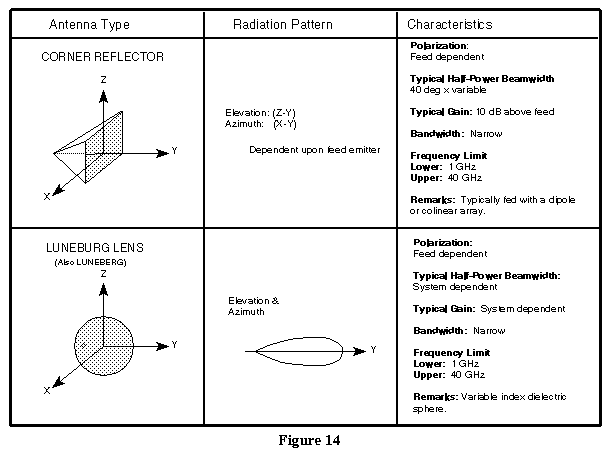
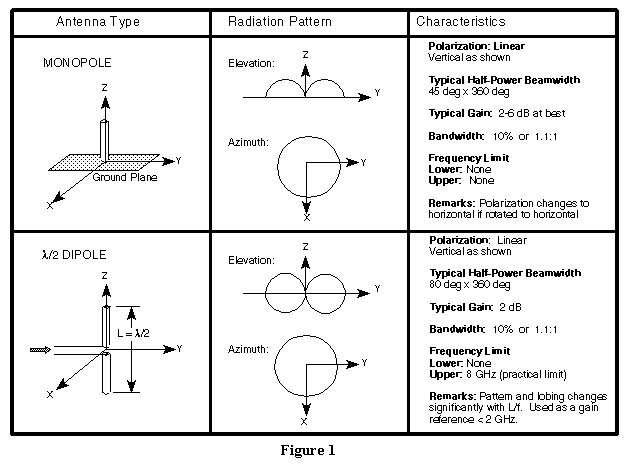
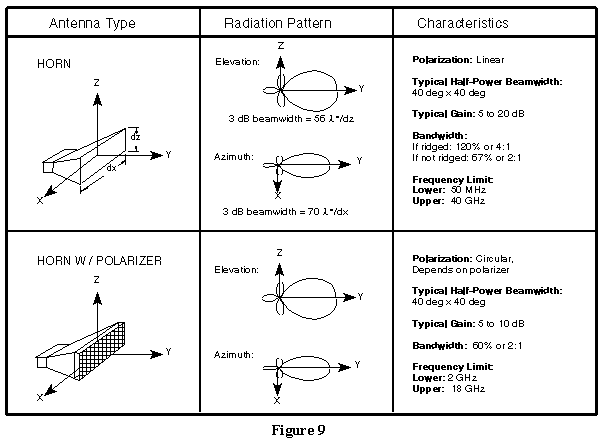
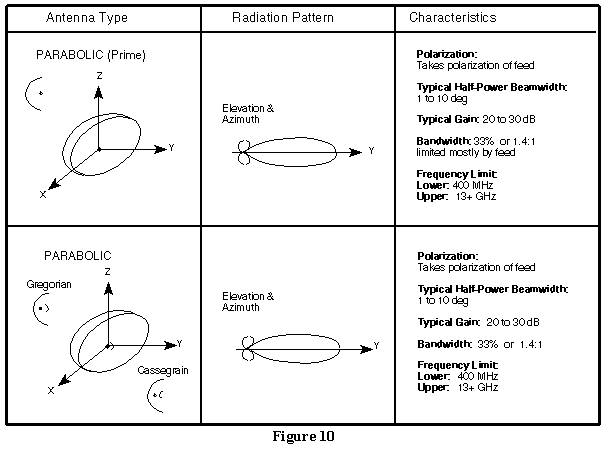
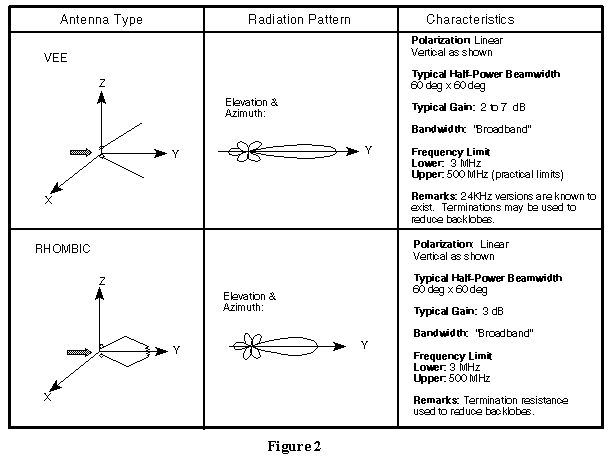
Links to Figures 1 thru 14 depict various antenna types and their associated
characteristics. The patterns depicted are those which most closely match the purpose for
which the given shape was intended. In other words, the radiation pattern can change
dramatically depending upon frequency, and the wavelength to antenna characteristic
length ratio. Antennas are designed for a particular frequency. Usually the characteristic
length is a multiple of
/2 minus 2-15% depending on specific antenna characteristics.
The gain is assumed to mean directional gain of the antenna compared to an isotropic radiator transmitting to or receiving from all directions.
The half-power (-3 dB) beamwidth is a measure of the directivity of the antenna.
Polarization, which is the direction of the electric (not magnetic) field of an antenna is another important antenna characteristic. This may be a consideration for optimizing reception or jamming.
The bandwidth is a measure of how much the frequency can be varied while still obtaining an acceptable VSWR (2:1 or less) and minimizing losses in unwanted directions (See Glossary). A 2:1 VSWR corresponds to a 9.5dB (or 10%) return loss (see VSWR Section).
Two methods for computing antenna bandwidth are used:
Narrowband by %,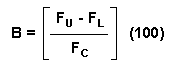 ,
where FC = Center frequency
,
where FC = Center frequency
| % | Ratio |
| 5 10 20 30 40 50 60 | 1.05 : 1 1.11 : 1 1.22 : 1 1.35 : 1 1.50 : 1 1.67 : 1 1.85 : 1 |
| 67 100 120 133 150 160 163 | 2 : 1 3 : 1 4 : 1 5 : 1 7 : 1 9 : 1 10 : 1 |

An antenna is considered broadband if FU/FL > 2.
The table at the right shows the equivalency of the two, however the upper right and lower left cell values are not normally used because of the aforementioned difference in broadband/narrowband.
The following lists antenna types. The linked figure shows radiation pattern, frequency limits, polarizations, etc.