 RAW VIDEO
RAW VIDEO
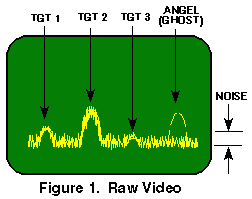
Raw video displays are simply oscilloscopes that display the detected and amplified target return signal (and the receiver noise). Raw video displays require a human operator to interpret the various target noise and clutter signals.
In Figure 1, an operator could readily identify three targets and a ghost (a ghost is a phony target that usually fades in and out and could be caused by birds, weather, or odd temporary reflections - also referred to as an angel). Target 3 is a weak return and hidden in the noise - an operator can identify it as a target by the "mouse under the rug" effect of raising the noise base line.
 SYNTHETIC VIDEO
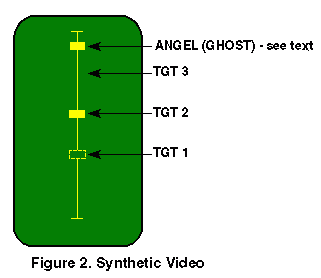
Synthetic video displays use a computer to clean up the display by eliminating noise and clutter and creating it's own precise symbol for each target.
In the adjoining figure 2, target 1 comes and goes because it is barely above the receiver noise level - notice
that it is quite clear on the raw video. Target 3 wasn't recognized by the computer because it's to far down in
the noise. The computer validated the ghost as a target. The ghost might be a real target with glint or ECM
characteristics that were recognized by the computer but not the operator.
SEARCH AND ACQUISITION RADARS
They generally use either a PPI or a sector PPI display. PPI displays can be either raw video or synthetic video.
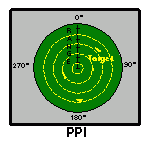 PPI scope (plan position
indicator).
PPI scope (plan position
indicator).
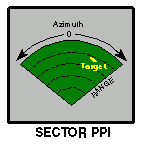 Sector PPI scope.
TRACKING RADARS
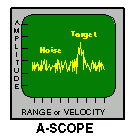
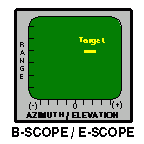
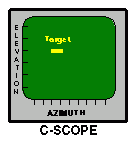
Usually use some combination of A, B, C, or E scope displays. There are many other types of displays that have been used at one time or another - including meters - but those listed here are the most common in use today.
 A-SCOPE
 B-SCOPE
 C-SCOPE