by Zach Dorfman (22 Sep 2022)
There are a number of unwritten rules in the world of espionage. These practices of the profession - though quietly accepted universally as "fair game" - can engender haughty rhetorical denunciations when an offending state is caught engaging in them.
Sometimes, countries will strategically disclose evidence of these sorts of intelligence activities. But, much more frequently, these actions remain hidden to the public. Governments know it generally isn't in their self-interest to draw attention to the workaday, business-as-usual world of intelligence. (Plus: What a rival spy service doesn't know that you know about their efforts can offer many counterintelligence advantages.)
For instance, it's universally understood that a country's diplomatic facilities abroad themselves are going to be the object of attempted sustained technical spying or eavesdropping by the host state (and likely some third countries, too). It's just the nature of the game.
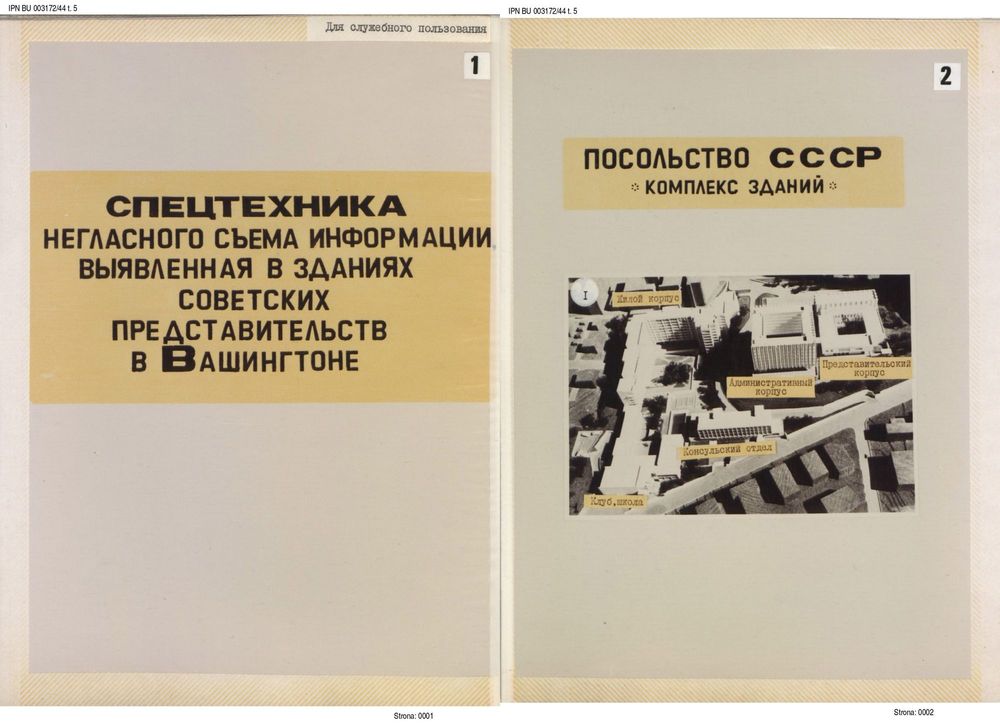
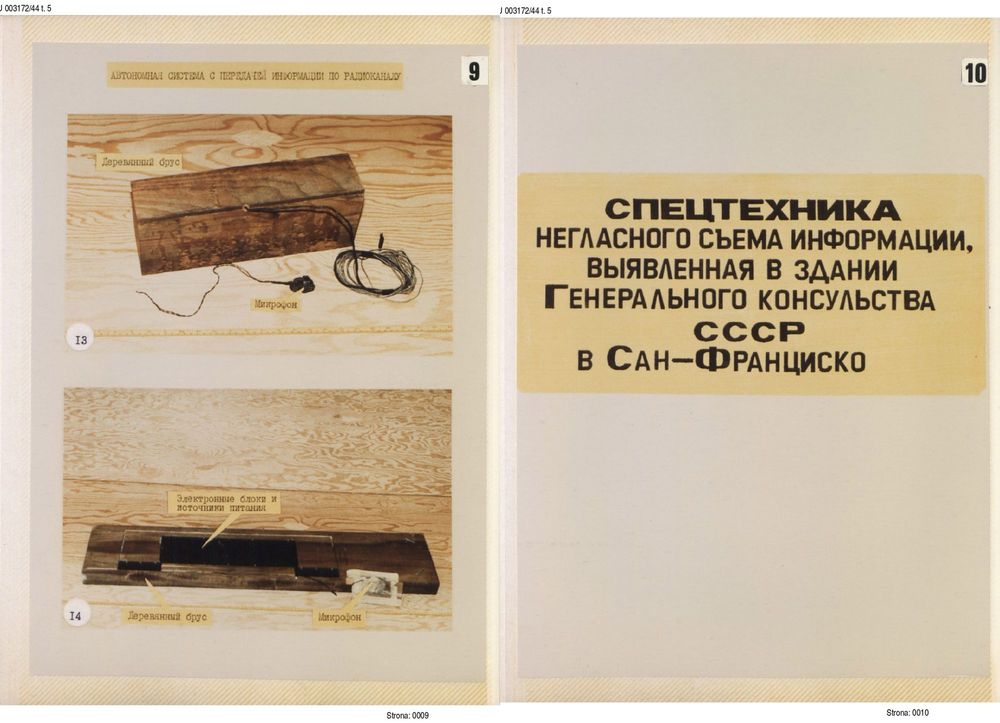
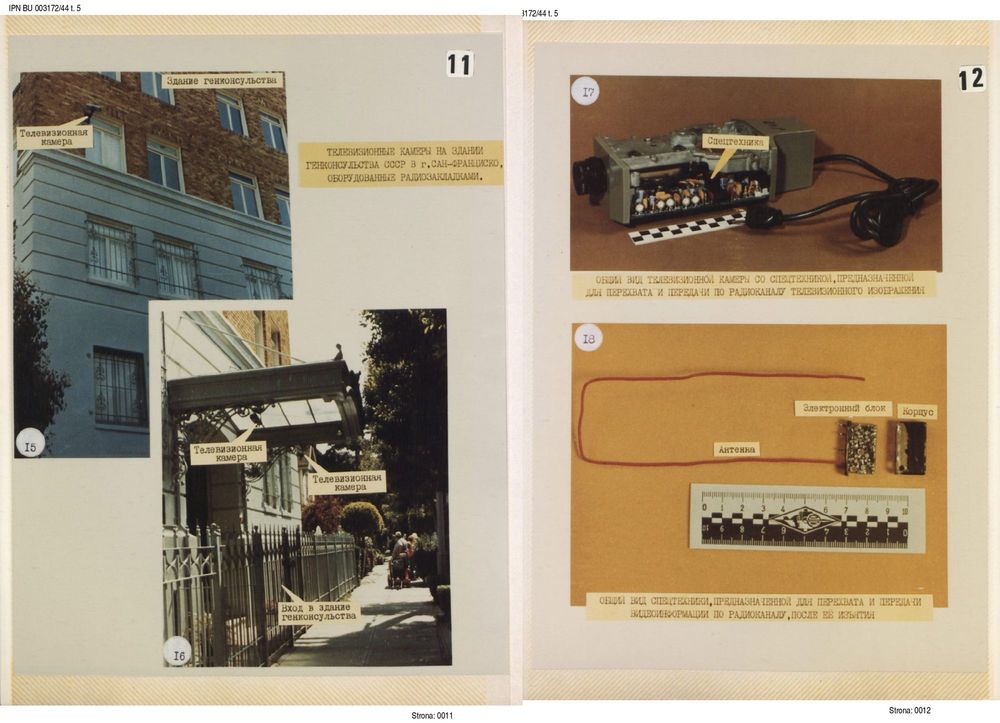
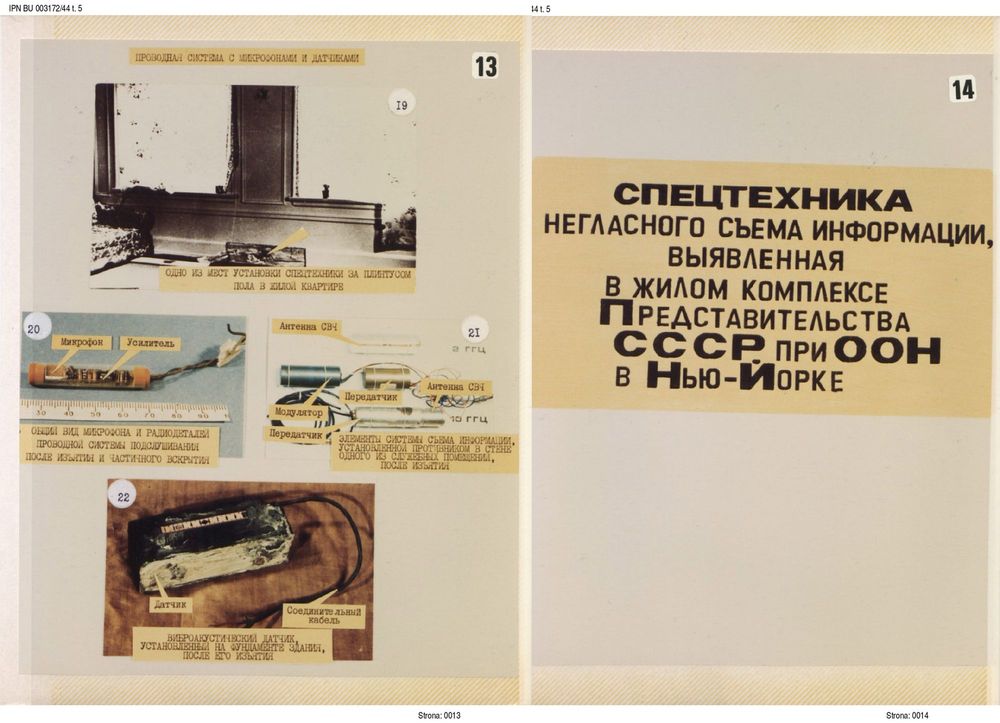
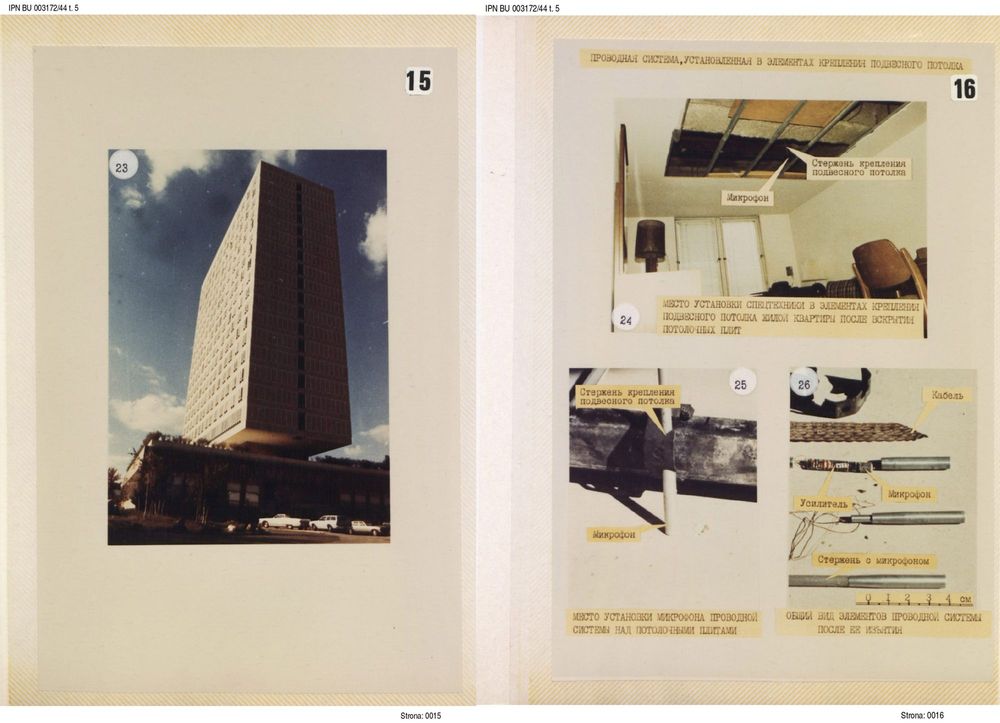
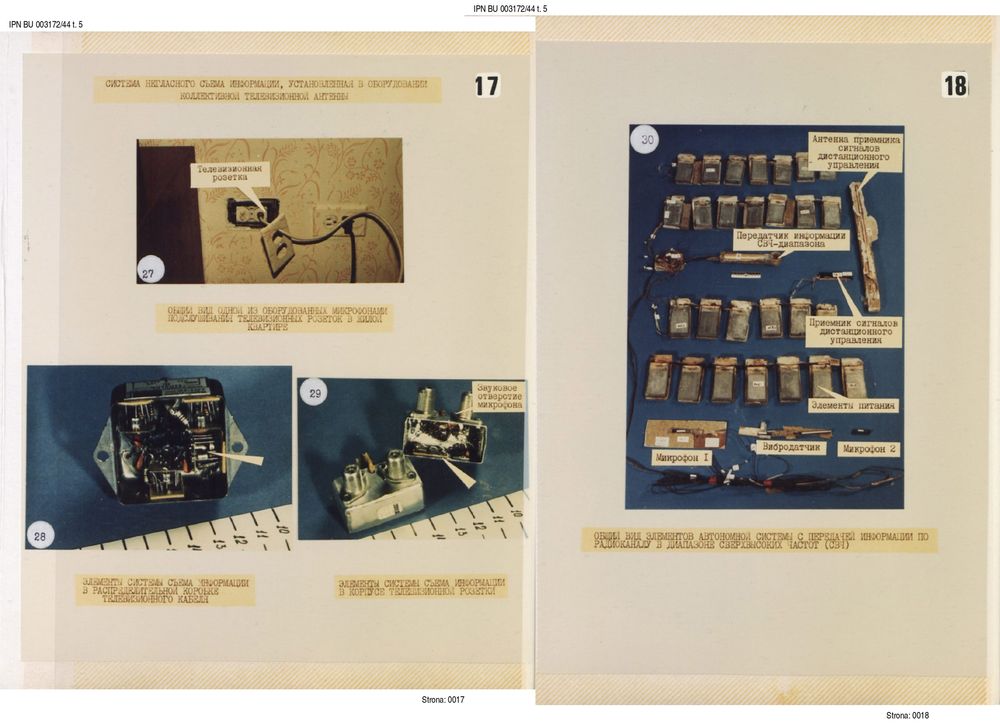
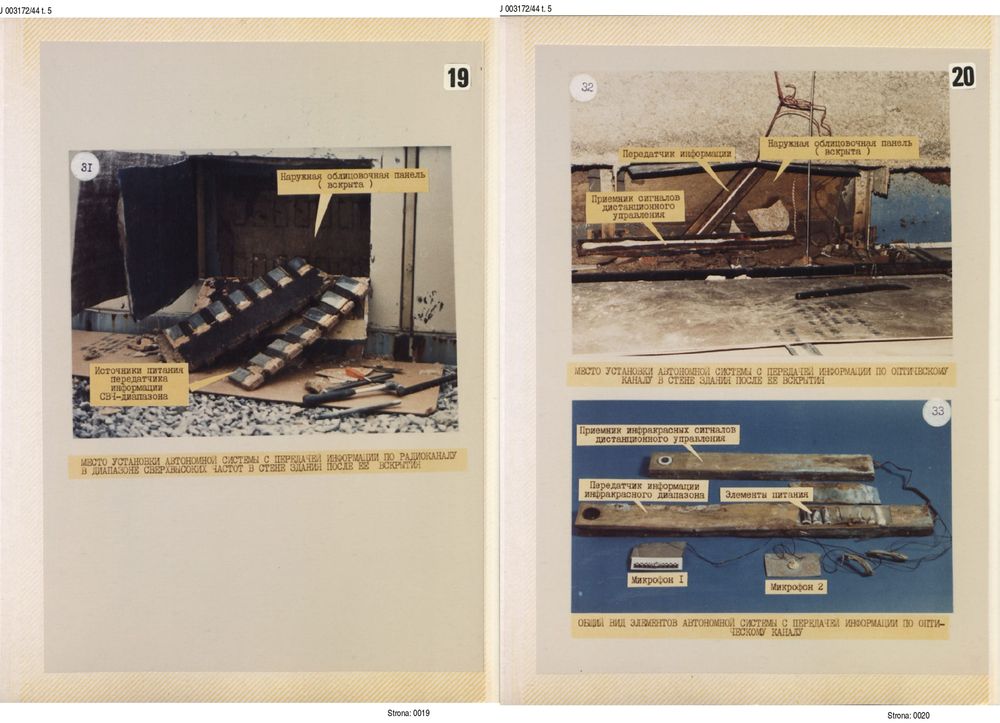
Recently, I obtained a set of declassified 1980s intelligence files from Poland's cold war-era archives. The files detailed a Soviet operation to identify and remove a cornucopia of bugs placed in Russian diplomatic facilities across the United States. The document - written in Russian and almost certainly produced by the KGB, unlike the other Polish-language files in the tranche of documents - provides a meticulous pictorial account of the ways in which the U.S. spy services sought to technically surveil the Russians on American soil. The file offers an unprecedented, stunning - if dated - look at these efforts to eavesdrop on Russian government activities within the U.S.
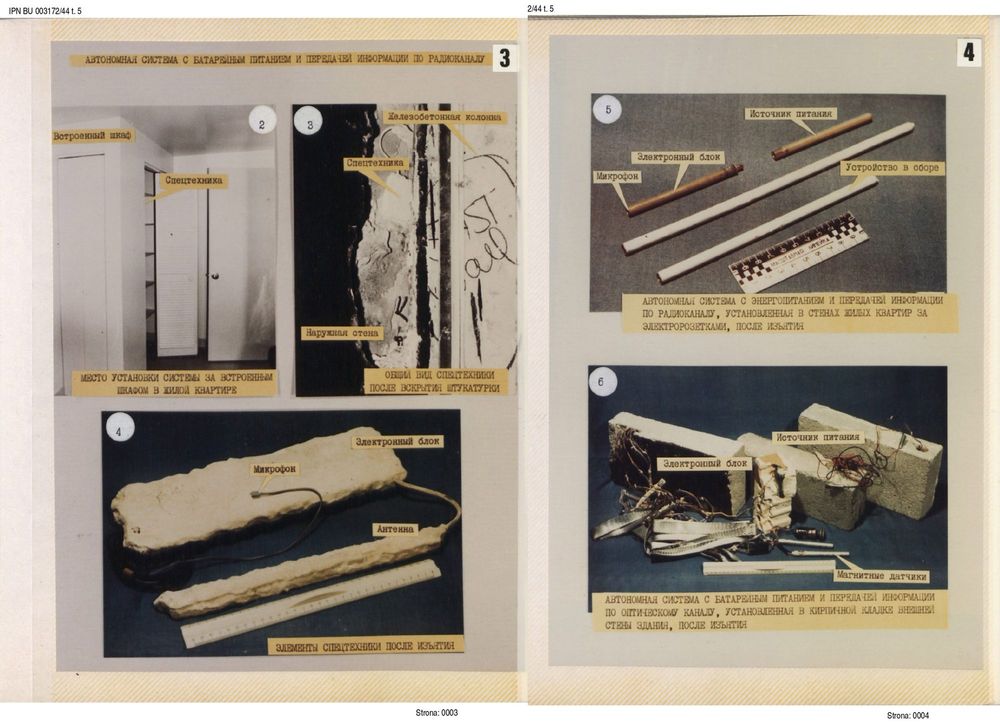
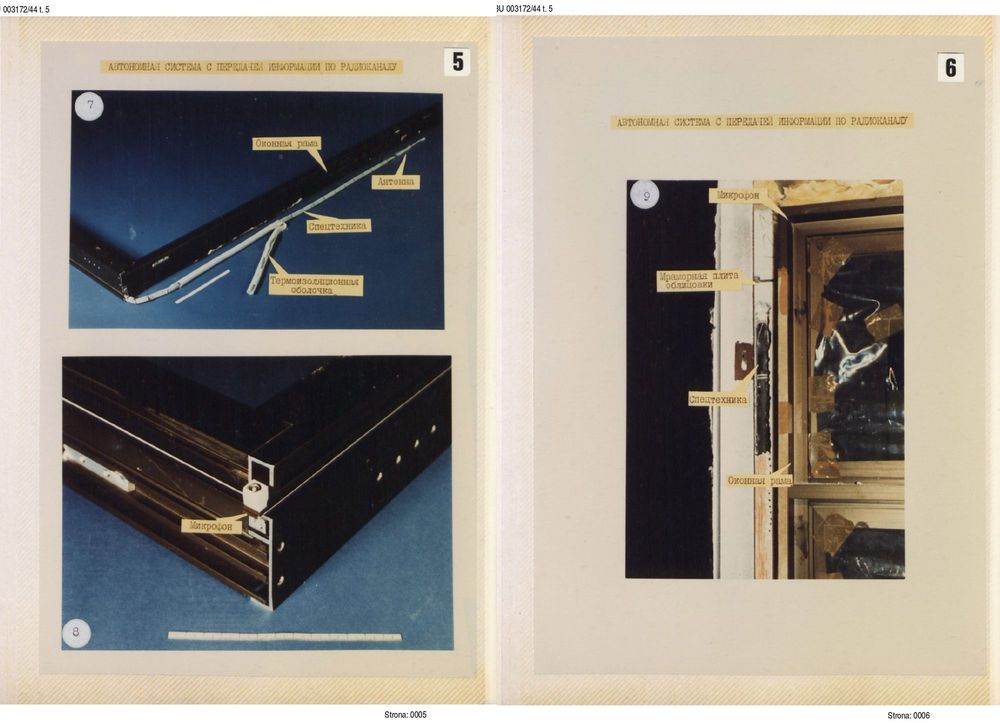
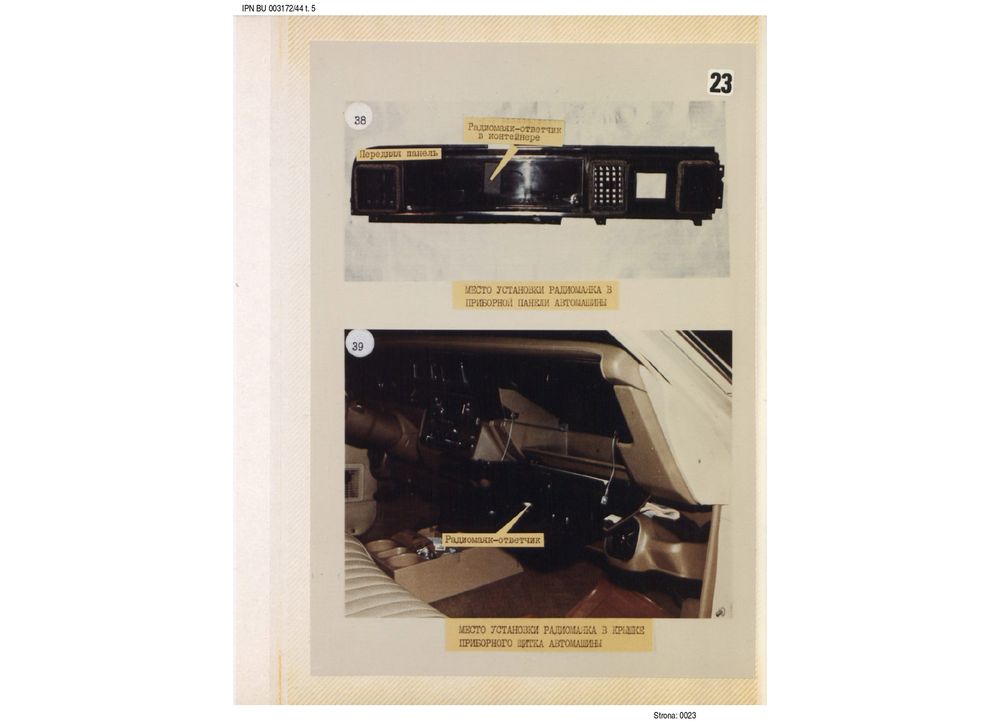
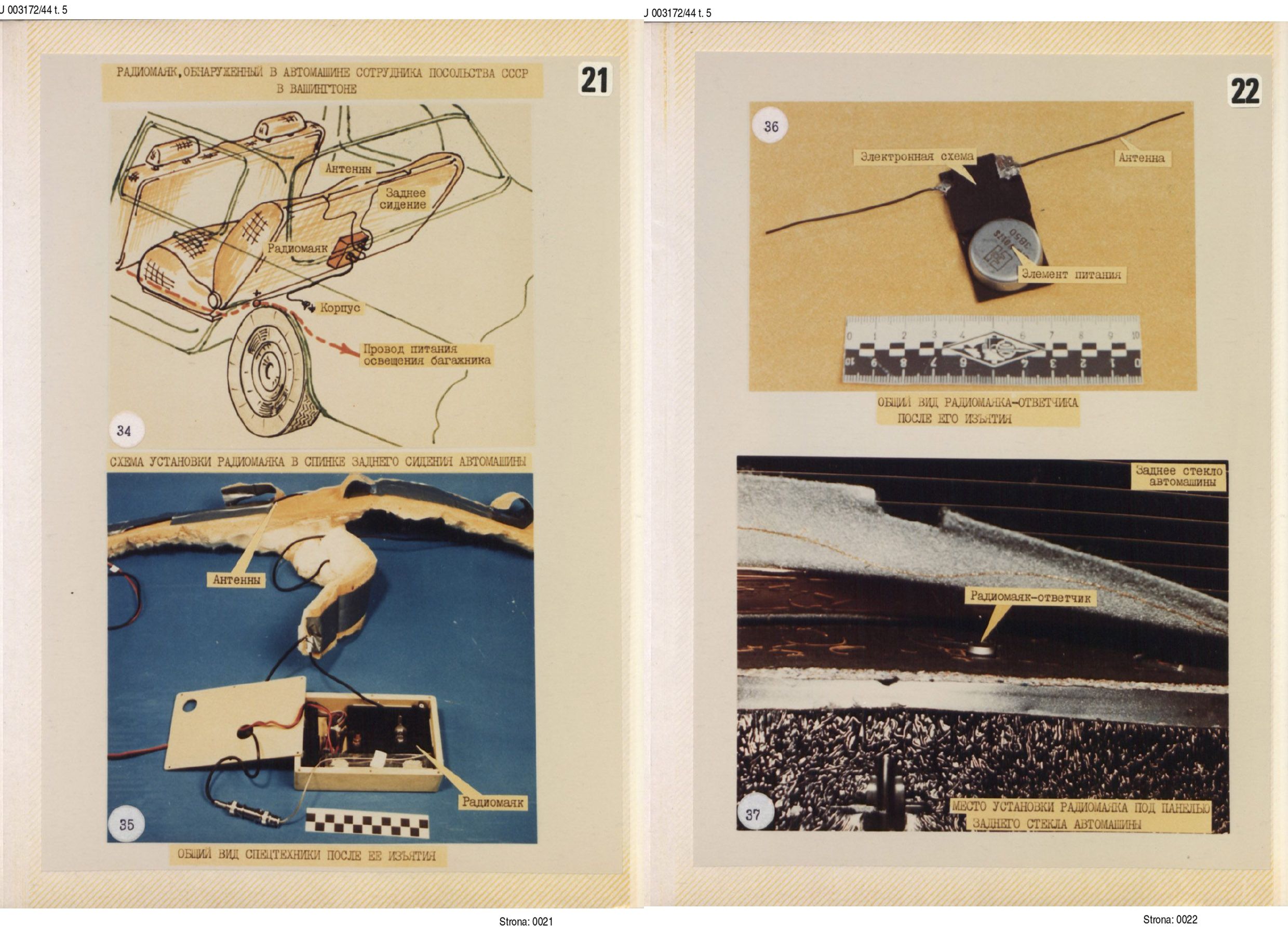
The file details a number of bugs found at Soviet diplomatic facilities in Washington, D.C., New York, and San Francisco, as well as in a Russian government-owned vacation compound, apartments used by Russia personnel, and even Russian diplomats' cars. And the bugs were everywhere: encased in plaster in an apartment closet; behind electrical and television outlets; bored into concrete bricks and threaded into window frames; inside wooden beams and baseboards and stashed within a building's foundation itself; surreptitiously attached to security cameras; wired into ceiling panels and walls; and secretly implanted into the backseat of cars and in their window panels, instrument panels, and dashboards. It's an impressive - and impressively thorough - effort by U.S. counterspies.
Album Page 1

Top Right Stamp: Для служебного пользования
                 For official use only

Main Title: СПЕЦТЕХНИКА НЕГЛАСНОГО СЪЕМА ИНФОРМАЦИИ, ВЫЯВЛЕННАЯ В ЗДАНИЯХ СОВЕТСКИХ ПРЕДСТАВИТЕЛЬСТВ В ВАШИНГТОНЕ
            Special equipment for covert information gathering discovered in the buildings of Soviet missions in Washington

Album Page 2

Heading: ПОСОЛЬСТВО СССР / КОМПЛЕКС ЗДАНИЙ
         Embassy of the USSR / Building Complex

Photo 1

Жилой корпус
Residential building

Административный корпус
Administrative building

Представительский корпус
Representative (reception) building

Консульский отдел
Consular section

Клуб, школа
Club, school
Album Page 3

Top Banner: АВТОНОМНАЯ СИСТЕМА С БАТАРЕЙНЫМ ПИТАНИЕМ И ПЕРЕДАЧЕЙ ИНФОРМАЦИИ ПО РАДИОКАНАЛУ
            Autonomous battery-powered system with radio-channel information transmission

Photo 2

Встроенный шкаф
Built-in closet

Спецтехника
Special equipment

Caption: МЕСТО УСТАНОВКИ СИСТЕМЫ ЗА ВСТРОЕННЫМ ШКАФОМ В ЖИЛОЙ КВАРТИРЕ
         Installation location of the system behind a built-in closet in a residential apartment

Photo 3

Железобетонная колонна
Reinforced concrete column

Спецтехника
Special equipment

Наружная стена
Exterior wall

Caption: ОБЩИЙ ВИД СПЕЦТЕХНИКИ ПОСЛЕ ВСКРЫТИЯ ШТУКАТУРКИ
         General view of the special equipment after breaking open the plaster

Photo 4

Микрофон
Microphone

Электронный блок
Electronic unit

Антенна
Antenna

Caption: ЭЛЕМЕНТЫ СПЕЦТЕХНИКИ ПОСЛЕ ИЗЪЯТИЯ
         Components of the special equipment after removal

Album Page 4

Photo 5

Микрофон
Microphone

Электронный блок
Electronic unit

Источник питания
Power supply

Устройство в сборе
Assembled device

(On Ruler): МАСШТАБНАЯ ЛИНЕЙКА
            Scale ruler

Caption: АВТОНОМНАЯ СИСТЕМА С ЭНЕРГОПИТАНИЕМ И ПЕРЕДАЧЕЙ ИНФОРМАЦИИ ПО РАДИОКАНАЛУ, УСТАНОВЛЕННАЯ В СТЕНАХ ЖИЛЫХ КВАРТИР ЗА ЭЛЕКТРОРОЗЕТКАМИ, ПОСЛЕ ИЗЪЯТИЯ
         Autonomous system with power supply and radio-channel information transmission, installed in the walls of residential apartments behind electrical outlets, after removal

Photo 6

Электронный блок
Electronic unit

Источник питания
Power supply

Магнитные датчики
Magnetic sensors

Caption: АВТОНОМНАЯ СИСТЕМА С БАТАРЕЙНЫМ ПИТАНИЕМ И ПЕРЕДАЧЕЙ ИНФОРМАЦИИ ПО ОПТИЧЕСКОМУ КАНАЛУ, УСТАНОВЛЕННАЯ В КИРПИЧНОЙ КЛАДКЕ ВНЕШНЕЙ СТЕНЫ ЗДАНИЯ, ПОСЛЕ ИЗЪЯТИЯ
         Autonomous battery-powered system with optical-channel information transmission, installed in the brickwork of the building's exterior wall, after removal
Album Page 5

Top Banner: АВТОНОМНАЯ СИСТЕМА С ПЕРЕДАЧЕЙ ИНФОРМАЦИИ ПО РАДИОКАНАЛУ
            Autonomous system with radio-channel information transmission

Photo 7

Оконная рама
Window frame

Антенна
Antenna

Спецтехника
Special equipment

Термоизоляционная оболочка
Thermal insulation casing (sheath)

Photo 8

Микрофон
Microphone

Album Page 6

Top Banner: АВТОНОМНАЯ СИСТЕМА С ПЕРЕДАЧЕЙ ИНФОРМАЦИИ ПО РАДИОКАНАЛУ
            Autonomous system with radio-channel information transmission

Photo 9

Микрофон
Microphone

Мраморная плита облицовки
Marble cladding (facing) slab

Спецтехника
Special equipment

Оконная рама
Window frame
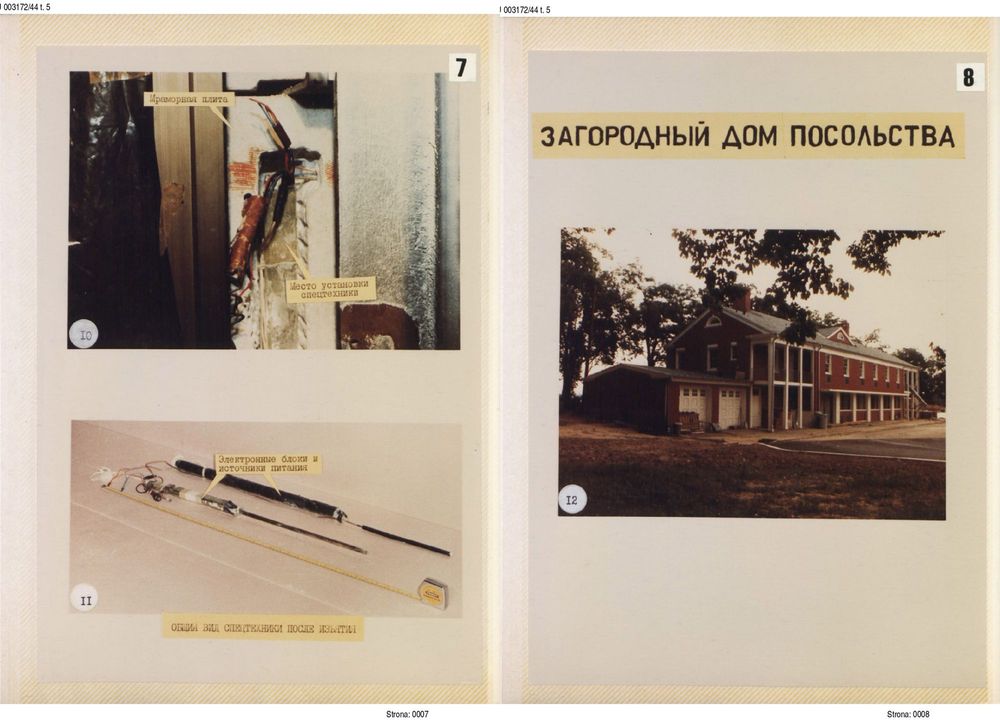
Album Page 7

Photo 10

Мраморная плита
Marble slab

Место установки спецтехники
Installation location of the special equipment

Photo 11

Электронные блоки и источники питания
Electronic units and power supplies

Caption: ОБЩИЙ ВИД СПЕЦТЕХНИКИ ПОСЛЕ ИЗЪЯТИЯ
         General view of the special equipment after removal

Album Page 8

Heading: ЗАГОРОДНЫЙ ДОМ ПОСОЛЬСТВА
         Embassy country house (residence)

Photo 12 (No text labels)
Album Page 9

Top Banner: АВТОНОМНАЯ СИСТЕМА С ПЕРЕДАЧЕЙ ИНФОРМАЦИИ ПО РАДИОКАНАЛУ
            Autonomous system with radio-channel information transmission

Photo 13

Деревянный брус
Wooden beam (timber block)

Микрофон
Microphone

Photo 14

Электронные блоки и источники питания
Electronic units and power supplies

Деревянный брус
Wooden beam

Микрофон
Microphone

Album Page 10

Main Title: СПЕЦТЕХНИКА НЕГЛАСНОГО СЪЕМА ИНФОРМАЦИИ, ВЫЯВЛЕННАЯ В ЗДАНИИ ГЕНЕРАЛЬНОГО КОНСУЛЬСТВА СССР В САН-ФРАНЦИСКО
            Special equipment for covert information gathering discovered in the building of the Consulate General of the USSR in San Francisco
Album Page 11

Photo 15

Здание генконсульства
Consulate General building

Телевизионная камера
Television camera

Text box (right): ТЕЛЕВИЗИОННЫЕ КАМЕРЫ НА ЗДАНИИ ГЕНКОНСУЛЬСТВА СССР В г. САН-ФРАНЦИСКО, ОБОРУДОВАННЫЕ РАДИОЗАКЛАДКАМИ.
                  Television cameras on the building of the USSR Consulate General in San Francisco, equipped with radio bugs (covert radio transmitters).

Photo 16

Телевизионная камера (×2)
Television camera

Вход в здание генконсульства
Entrance to the Consulate General building

Album Page 12

Photo 17

Спецтехника
Special equipment

Caption: ОБЩИЙ ВИД ТЕЛЕВИЗИОННОЙ КАМЕРЫ СО СПЕЦТЕХНИКОЙ, ПРЕДНАЗНАЧЕННОЙ ДЛЯ ПЕРЕХВАТА И ПЕРЕДАЧИ ПО РАДИОКАНАЛУ ТЕЛЕВИЗИОННОГО ИЗОБРАЖЕНИЯ
         General view of a television camera with special equipment designed to intercept and transmit the television image via radio channel

Photo 18

Антенна
Antenna

Электронный блок
Electronic unit

Корпус
Housing (casing)

Caption: ОБЩИЙ ВИД СПЕЦТЕХНИКИ, ПРЕДНАЗНАЧЕННОЙ ДЛЯ ПЕРЕХВАТА И ПЕРЕДАЧИ ВИДЕОИНФОРМАЦИИ ПО РАДИОКАНАЛУ, ПОСЛЕ ЕЕ ИЗЪЯТИЯ
         General view of the special equipment designed to intercept and transmit video information via radio channel, after its removal
Album Page 13

Top Banner: ПРОВОДНАЯ СИСТЕМА С МИКРОФОНАМИ И ДАТЧИКАМИ
            Wired system with microphones and sensors

Photo 19

Caption: ОДНО ИЗ МЕСТ УСТАНОВКИ СПЕЦТЕХНИКИ ЗА ПЛИНТУСОМ ПОЛА В ЖИЛОЙ КВАРТИРЕ
         One of the installation locations of the special equipment behind a floor baseboard in a residential apartment

Photo 20

Микрофон
Microphone

Усилитель
Amplifier

Caption: ОБЩИЙ ВИД МИКРОФОНА И РАДИОДЕТАЛЕЙ ПРОВОДНОЙ СИСТЕМЫ ПОДСЛУШИВАНИЯ ПОСЛЕ ИЗЪЯТИЯ И ЧАСТИЧНОГО ВСКРЫТИЯ
         General view of the microphone and radio components of the wired eavesdropping system after removal and partial disassembly

Photo 21

Антенна СВЧ (×2)
Microwave (SHF) antenna

2 ГГц / 10 ГГц
2 GHz / 10 GHz

Модулятор
Modulator

Передатчик (×2)
Transmitter

Caption: ЭЛЕМЕНТЫ СИСТЕМЫ СЪЕМА ИНФОРМАЦИИ, УСТАНОВЛЕННОЙ ПРОТИВНИКОМ В СТЕНЕ ОДНОГО ИЗ СЛУЖЕБНЫХ ПОМЕЩЕНИЙ, ПОСЛЕ ИЗЪЯТИЯ
         Components of the information-gathering system installed by the adversary in the wall of one of the office rooms, after removal

Photo 22

Датчик
Sensor

Соединительный кабель
Connecting cable

Caption: ВИБРОАКУСТИЧЕСКИЙ ДАТЧИК, УСТАНОВЛЕННЫЙ НА ФУНДАМЕНТЕ ЗДАНИЯ, ПОСЛЕ ЕГО ИЗЪЯТИЯ
         Vibroacoustic sensor installed on the building's foundation, after its removal

Album Page 14

Main Title: СПЕЦТЕХНИКА НЕГЛАСНОГО СЪЕМА ИНФОРМАЦИИ, ВЫЯВЛЕННАЯ В ЖИЛОМ КОМПЛЕКСЕ ПРЕДСТАВИТЕЛЬСТВА СССР ПРИ ООН В НЬЮ-ЙОРКЕ
            Special equipment for covert information gathering discovered in the residential complex of the USSR Mission to the UN in New York
Album Page 15

Photo 23 (No text labels)

Album Page 16

Top Banner: ПРОВОДНАЯ СИСТЕМА, УСТАНОВЛЕННАЯ В ЭЛЕМЕНТАХ КРЕПЛЕНИЯ ПОДВЕСНОГО ПОТОЛКА
            Wired system installed in the mounting elements of a suspended ceiling

Photo 24

Стержень крепления подвесного потолка
Suspended ceiling mounting rod

Микрофон
Microphone

Caption: МЕСТО УСТАНОВКИ СПЕЦТЕХНИКИ В ЭЛЕМЕНТАХ КРЕПЛЕНИЯ ПОДВЕСНОГО ПОТОЛКА ЖИЛОЙ КВАРТИРЫ ПОСЛЕ ВСКРЫТИЯ ПОТОЛОЧНЫХ ПЛИТ
         Installation location of the special equipment in the mounting elements of a residential apartment's suspended ceiling after opening the ceiling tiles

Photo 25

Стержень крепления подвесного потолка
Suspended ceiling mounting rod

Микрофон
Microphone

Caption: МЕСТО УСТАНОВКИ МИКРОФОНА ПРОВОДНОЙ СИСТЕМЫ НАД ПОТОЛОЧНЫМИ ПЛИТАМИ
         Installation location of the wired system's microphone above the ceiling tiles

Photo 26

Кабель
Cable

Микрофон
Microphone

Усилитель
Amplifier

Стержень с микрофоном
Rod with microphone

(On Ruler): см
            cm

Caption: ОБЩИЙ ВИД ЭЛЕМЕНТОВ ПРОВОДНОЙ СИСТЕМЫ ПОСЛЕ ЕЕ ИЗЪЯТИЯ
         General view of the wired system components after removal
It's no surprise that U.S. spy agencies would devote serious resources to wiring up Russian properties across the country, particularly during one of the chilliest decades of the cold war. (And, indeed, there have been prior revelations in the press about secret tunnels dug by U.S. spy agencies beneath Soviet diplomatic facilities in Washington, D.C., and San Francisco to facilitate eavesdropping operations.) But there are a number of notable takeaways from the Soviet-era document, according to former intelligence officials.
"The number of bugs is useful as an indication that this is a sustained operation over years," a former U.K. intelligence official with experience conducting technical operations told me. (The official requested anonymity to discuss sensitive intelligence techniques.) The sheer variety in where U.S. counterspies placed the bugs shows a great deal of "creativity" on their part, the former U.K. official said. While the bugging of cars and power outlets is considered "fairly standard," the former official added, U.S. spies cleverly inserted bugs in more unusual locations like window frames.
The KGB file also shows how limited the technological capabilities of the U.S. were at the time compared to today, though they were cutting-edge at the time, according to former intelligence officials. The bugs are "a lot smaller than equivalent commercial technology at the time," but bigger than what you might see used in similar technical operations today, the former U.K. official said. Much of that has to do with innovations in battery technology, including enhanced battery life and smaller battery size, key components for the technology used in these sorts of operations, according to former officials.
Album Page 17

Top Banner: СИСТЕМА НЕГЛАСНОГО СЪЕМА ИНФОРМАЦИИ, УСТАНОВЛЕННАЯ В ОБОРУДОВАНИИ КОЛЛЕКТИВНОЙ ТЕЛЕВИЗИОННОЙ АНТЕННЫ
            Covert information-gathering system installed in the master (collective) television antenna equipment

Photo 27

Телевизионная розетка
Television outlet (wall jack)

Caption: ОБЩИЙ ВИД ОДНОЙ ИЗ ОБОРУДОВАННЫХ МИКРОФОНАМИ ПОДСЛУШИВАНИЯ ТЕЛЕВИЗИОННЫХ РОЗЕТОК В ЖИЛОЙ КВАРТИРЕ
         General view of one of the television outlets equipped with eavesdropping microphones in a residential apartment

Photo 28

Caption: ЭЛЕМЕНТЫ СИСТЕМЫ СЪЕМА ИНФОРМАЦИИ В РАСПРЕДЕЛИТЕЛЬНОЙ КОРОБКЕ ТЕЛЕВИЗИОННОГО КАБЕЛЯ
         Components of the information-gathering system in the television cable junction (distribution) box

Photo 29

Звуковое отверстие микрофона
Microphone sound hole (acoustic port)

Caption: ЭЛЕМЕНТЫ СИСТЕМЫ СЪЕМА ИНФОРМАЦИИ В КОРПУСЕ ТЕЛЕВИЗИОННОЙ РОЗЕТКИ
         Components of the information-gathering system in the housing of the television outlet

Album Page 18

Photo 30

Антенна приемника сигналов дистанционного управления
Remote-control signal receiver antenna

Передатчик информации СВЧ-диапазона
Microwave-band (SHF) information transmitter

Приемник сигналов дистанционного управления
Remote-control signal receiver

Элементы питания
Power cells (batteries)

Микрофон 1
Microphone 1

Вибродатчик
Vibration sensor

Микрофон 2
Microphone 2

Caption: ОБЩИЙ ВИД ЭЛЕМЕНТОВ АВТОНОМНОЙ СИСТЕМЫ С ПЕРЕДАЧЕЙ ИНФОРМАЦИИ ПО РАДИОКАНАЛУ В ДИАПАЗОНЕ СВЕРХВЫСОКИХ ЧАСТОТ (СВЧ)
         General view of the components of an autonomous system with radio-channel information transmission in the superhigh-frequency (microwave / SHF) band
Album Page 19

Photo 31

Наружная облицовочная панель (вскрыта)
Exterior cladding panel (opened)

Источники питания передатчика информации СВЧ-диапазона
Power supplies of the microwave-band (SHF) information transmitter

Caption: МЕСТО УСТАНОВКИ АВТОНОМНОЙ СИСТЕМЫ С ПЕРЕДАЧЕЙ ИНФОРМАЦИИ ПО РАДИОКАНАЛУ В ДИАПАЗОНЕ СВЕРХВЫСОКИХ ЧАСТОТ В СТЕНЕ ЗДАНИЯ ПОСЛЕ ЕЕ ВСКРЫТИЯ
         Installation location of the autonomous system with radio-channel information transmission in the superhigh-frequency (microwave) band inside the building wall after it was opened

Album Page 20

Photo 32

Передатчик информации
Information transmitter

Наружная облицовочная панель (вскрыта)
Exterior cladding panel (opened)

Приемник сигналов дистанционного управления
Remote-control signal receiver

Caption: МЕСТО УСТАНОВКИ АВТОНОМНОЙ СИСТЕМЫ С ПЕРЕДАЧЕЙ ИНФОРМАЦИИ ПО ОПТИЧЕСКОМУ КАНАЛУ В СТЕНЕ ЗДАНИЯ ПОСЛЕ ЕЕ ВСКРЫТИЯ
         Installation location of the autonomous system with optical-channel information transmission inside the building wall after it was opened

Photo 33

Приемник инфракрасных сигналов дистанционного управления
Infrared remote-control signal receiver

Передатчик информации инфракрасного диапазона
Infrared-band information transmitter

Элементы питания
Power cells (batteries)

Микрофон 1
Microphone 1

Микрофон 2
Microphone 2

Caption: ОБЩИЙ ВИД ЭЛЕМЕНТОВ АВТОНОМНОЙ СИСТЕМЫ С ПЕРЕДАЧЕЙ ИНФОРМАЦИИ ПО ОПТИЧЕСКОМУ КАНАЛУ
         General view of the components of the autonomous system with optical-channel information transmission
Album Page 21

Top Banner: РАДИОМАЯК, ОБНАРУЖЕННЫЙ В АВТОМАШИНЕ СОТРУДНИКА ПОСОЛЬСТВА СССР В ВАШИНГТОНЕ
            Radio beacon discovered in the car of an employee of the USSR Embassy in Washington

Diagram 34

Антенны
Antennas

Заднее сидение
Rear seat

Радиомаяк
Radio beacon

Корпус
Housing (casing)

Провод питания освещения багажника
Trunk light power wire

Caption: СХЕМА УСТАНОВКИ РАДИОМАЯКА В СПИНКЕ ЗАДНЕГО СИДЕНИЯ АВТОМАШИНЫ
         Diagram of the radio beacon installation in the backrest of the car's rear seat

Photo 35

Антенны
Antennas

Радиомаяк
Radio beacon

Caption: ОБЩИЙ ВИД СПЕЦТЕХНИКИ ПОСЛЕ ЕЕ ИЗЪЯТИЯ
         General view of the special equipment after its removal

Album Page 22

Photo 36

Электронная схема
Electronic circuit

Антенна
Antenna

Элемент питания
Power cell (battery)

Caption: ОБЩИЙ ВИД РАДИОМАЯКА-ОТВЕТЧИКА ПОСЛЕ ЕГО ИЗЪЯТИЯ
         General view of the transponder radio beacon after its removal

Photo 37

Заднее стекло автомашины
Rear window of the car

Радиомаяк-ответчик
Transponder radio beacon

Caption: МЕСТО УСТАНОВКИ РАДИОМАЯКА ПОД ПАНЕЛЬЮ ЗАДНЕГО СТЕКЛА АВТОМАШИНЫ
         Installation location of the radio beacon under the car's rear window shelf (panel)
Album Page 23

Photo 38

Радиомаяк-ответчик в контейнере
Transponder radio beacon in a container

Передняя панель
Front panel (dashboard fascia)

Caption: МЕСТО УСТАНОВКИ РАДИОМАЯКА В ПРИБОРНОЙ ПАНЕЛИ АВТОМАШИНЫ
         Installation location of the radio beacon in the car's dashboard

Photo 39

Радиомаяк-ответчик
Transponder radio beacon

Caption: МЕСТО УСТАНОВКИ РАДИОМАЯКА В КРЫШКЕ ПРИБОРНОГО ЩИТКА АВТОМАШИНЫ
         Installation location of the radio beacon in the cover of the car's instrument panel (dashboard)
In fact, a former U.S. intelligence official said, battery-related innovations are some of the most closely guarded secrets within CIA's science and technology branch. "It is one of the most heavily compartmented things the agency does," says this former official. (CIA did not return a request for comment.)
Between improvements related to batteries, miniaturization, and radio frequency, eavesdropping devices have come a long way since the 1980s, according to the former U.S. intelligence official.
Because digital transmissions capabilities from bugs in this era were often rudimentary - and therefore easier to detect - many bugs actually required some sort of repeated physical access to pick up the data they stored, former officials said. "In the 80s, it was a lot of cash and carry," the former U.S. official said.
The lack of significant battery power in some of the bugs catalogued by the Soviets is revealing. "It tells you that it was a specific short-term surveillance op or that the people planting it expected to be able to semi-regularly replace them," the former U.K. intelligence official said.
But as antiquated as the technology revealed in the KGB file might be compared to the intelligence community's capabilities today, this period represented something of a zenith regarding the U.S.'s technical advantage over its rivals, according to the former U.S. intelligence official.
In the 1980s and 1990s, "we were far ahead in this tech, but we're not anymore," the former official said. By the mid-2000s, Russia and China had begun catching up to U.S. capabilities in this sphere, the former official added. The U.S. technical advantage - so pronounced decades ago, as revealed in this KGB file - has now given way to a much more even playing field today, this official recalled.
It's unknown why the Soviets declined to publicize all the bugs they found within their U.S.-based facilities. The Russians ripped them out from their hiding spots, ostensibly preventing them from feeding the U.S. disinformation through the listening devices and trackers they identified.
The likelier explanation is that the KGB knew that U.S. diplomatic facilities in the Soviet Union were bugged to hell - including, at certain points, with listening devices activated by blasting American facilities with microwaves. The use of this technique by the Soviets, which some U.S. officials believed sickened those exposed to it, became a serious diplomatic issue in the 1970s between the two superpowers.
But in this case, there was no evidence by the U.S. of normative transgression in the world of espionage - and nothing the KGB wouldn't gladly have done itself. Best to keep quiet and calm, sometimes, and just spy on.
Get in touch at zach@projectbrazen.com or securely at brushpass1@protonmail.com.
THE BRUSH PASS is an initiative of Project Brazen, a journalism studio and production company based in London and Singapore. Follow our newsletter WHALE HUNTING delving into the hidden world of the rich and powerful.